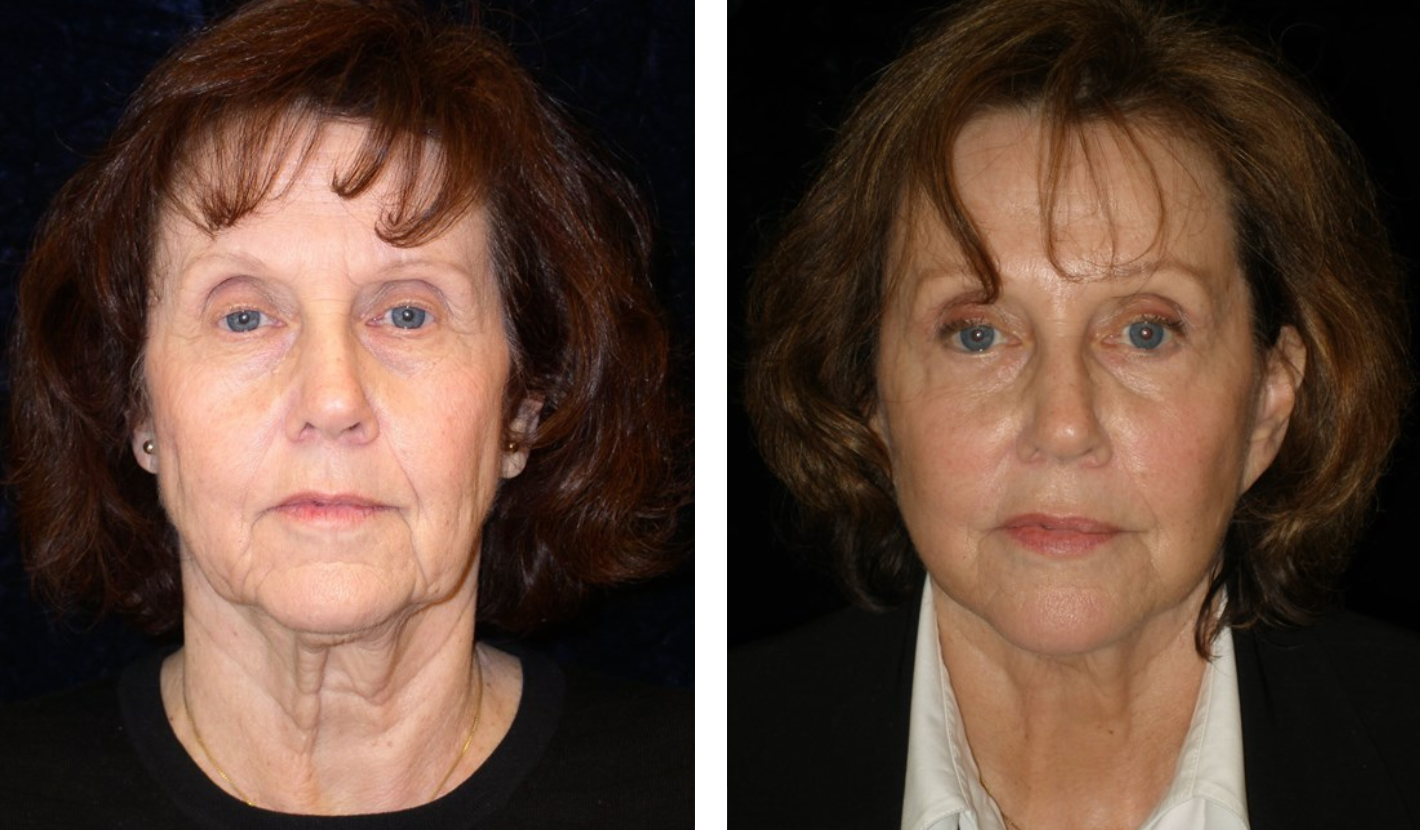



There’s a reason facial fat transfer has become one of the most sought-after procedures in facial rejuvenation: it solves a problem that fillers can help but can’t fully fix, using your own body’s tissue — permanently.
If you’ve noticed that your face has lost its fullness, that your cheeks have flattened, that hollows have appeared under your eyes or along your temples, or that your jawline and chin have softened in ways that make you look older than you feel — this is the procedure worth understanding.
At Aesthetica Cosmetic Surgery & Laser Center in Leesburg, VA, Dr. Phillip Chang has extensive experience with facial fat transfer — a nuanced, artful procedure that, when performed well, delivers natural-looking volume restoration that lasts for years or longer.
This blog is about giving you the full picture: what facial fat transfer actually is, how it differs from fillers, what the procedure and recovery involve, and why fall is the ideal time to have it done.

The Real Cause of Facial Aging — And Why It Matters
Most people associate facial aging with wrinkles. But the more significant driver of an aged appearance is volume loss.
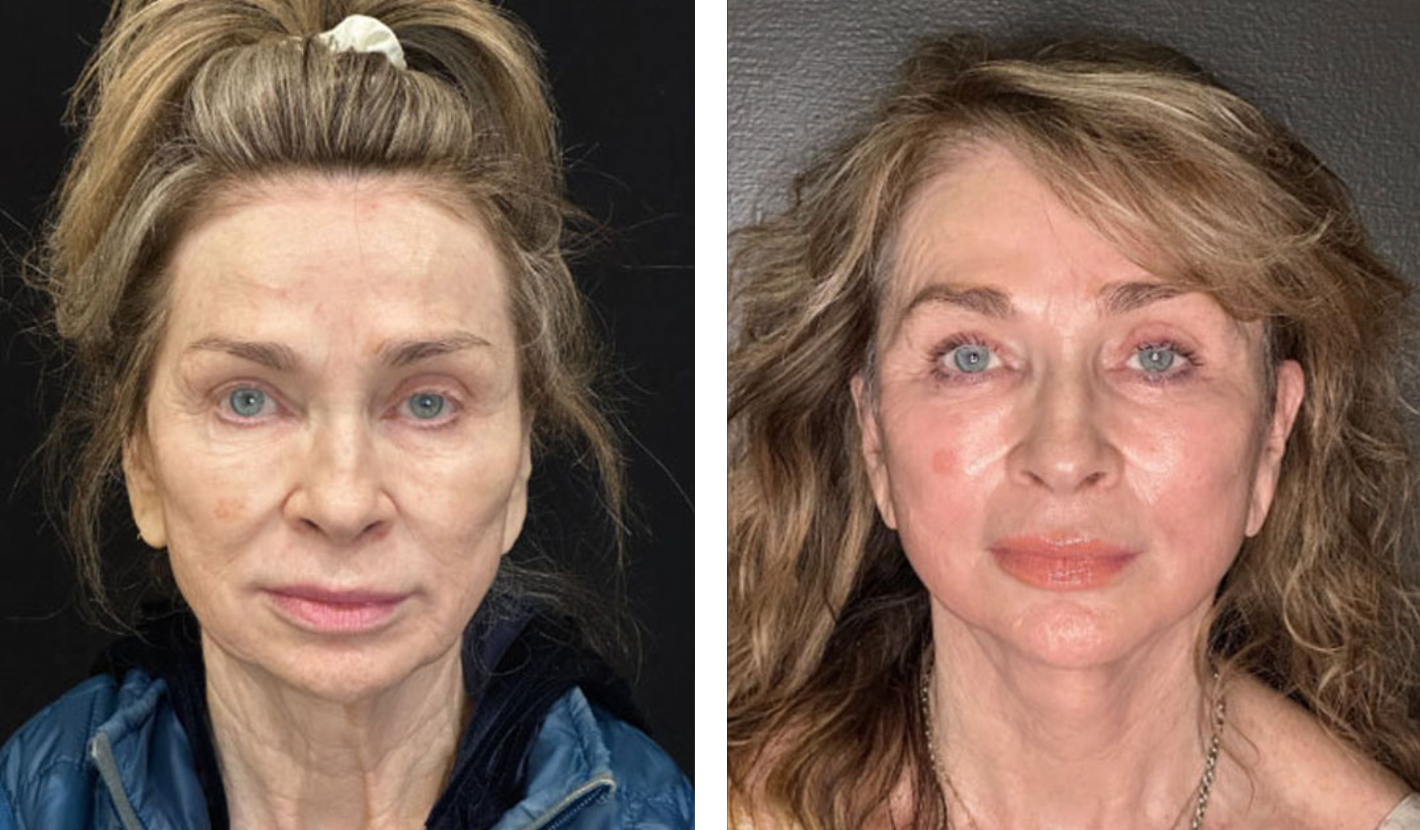
Youthful faces share a particular quality: they’re naturally full and rounded, with smooth transitions between the cheeks, temples, and under-eye area. As we age — and particularly as we lose fat from the face — that fullness diminishes. Cheeks flatten. Hollows deepen. The face takes on a more angular, skeletal appearance that reads as older, regardless of skin quality.
This is a structural problem, and it requires a structural solution.
Dermal fillers are a remarkable tool for addressing volume loss — and they’re a core part of the practice at Aesthetica Cosmetic Surgery & Laser Center. But they have a ceiling. Fillers are best for targeted, precise augmentation of specific areas. When the volume loss is significant, widespread, or when a client wants a result that feels and moves like their own tissue — because it is — facial fat transfer is the procedure that delivers it.
What Is Facial Fat Transfer?
Facial fat transfer (also called autologous fat grafting or fat injections) is a surgical procedure in which fat is harvested from one area of your body, processed, and re-injected into areas of the face where volume has been lost.
The fat used is entirely your own — harvested typically from the abdomen, thighs, or flanks through a mini-liposuction technique. Because it comes from you, there’s no risk of allergic reaction, no foreign substance, and no concern about how your body will respond to it.
The processed fat is then carefully re-injected by Dr. Chang into the precise areas of the face that need restoration — building volume layer by layer for a natural, proportionate result.
What Areas Can Be Treated?
Facial fat transfer is remarkably versatile. At Aesthetica Cosmetic Surgery & Laser Center, the most commonly treated areas include:
Cheeks and cheekbones — Restoring the full, lifted appearance that defines a youthful midface.
Temples — One of the first areas to hollow with age, and one of the most aging when left unaddressed.
Under-eye hollows (tear troughs) — Volume loss here creates the dark, sunken look that makes even well-rested people appear exhausted.
Nasolabial folds — The lines from the nose to the mouth deepen as the cheeks above them deflate. Restoring that volume addresses the folds from their root.
Lips and perioral area — Adding subtle volume to thinning lips and softening the lines around the mouth.
Jawline and chin — Enhancing definition and projection in areas where youthful structure has softened.
Overall facial volumization — When a client needs comprehensive rejuvenation across multiple zones, fat transfer allows Dr. Chang to restore the face holistically rather than one syringe at a time.
Fat Transfer vs. Dermal Fillers — What’s the Difference?
Both address volume loss. But they work differently, and the right choice depends on your goals, the extent of volume loss, and how long you want results to last.
| Dermal Fillers | Facial Fat Transfer | |
| Material | Hyaluronic acid or collagen stimulator | Your own fat |
| Longevity | 9 months – 2 years depending on product | Years to permanent for surviving fat |
| Procedure | In-office, non-surgical | Minor surgical procedure |
| Recovery | Minimal – return to work same day | 1–2 weeks of swelling/bruising |
| Best for | Targeted, precise augmentation | Significant volume loss, comprehensive restoration |
| Reversibility | HA fillers can be dissolved | Permanent (by design) |
For clients with moderate to significant facial volume loss — or those who have been managing their volume with regular filler appointments and want a longer-lasting foundation — fat transfer represents a meaningful upgrade in permanence and natural feel.
Many patients at Aesthetica Cosmetic Surgery & Laser Center use fat transfer for the foundational volume restoration and continue with occasional fillers or Botox for complementary refinement.
The Biological Advantage: Stem Cells and Growth Factors
One of the more exciting aspects of fat transfer that often goes unmentioned: fat tissue is rich in adipose-derived stem cells and growth factors — the same cellular machinery that drives skin regeneration and repair.
When fat is grafted into the face, those biologically active components don’t just add volume. They contribute to improved skin quality in the surrounding area: better texture, improved hydration, and subtle enhancement of the skin itself over the months following the procedure. It’s one of the reasons fat transfer patients often describe their skin as looking and feeling different — not just fuller — after recovery is complete.
A Note on the “Ozempic Face” Phenomenon
If you’ve followed aesthetic medicine news in recent years, you’ve likely seen discussion of “Ozempic face” — the significant facial volume loss that can accompany rapid weight loss associated with GLP-1 medications like semaglutide and tirzepatide.
For patients who have experienced this kind of volume loss — whether from medication, illness, or natural aging — facial fat transfer is one of the most effective and natural-looking solutions available. It restores the volume that was lost using the patient’s own tissue, with results that move and feel completely authentic because they are.
If this describes your situation, a consultation with Dr. Chang at Aesthetica Cosmetic Surgery & Laser Center is a worthwhile conversation.
What to Expect: The Procedure and Recovery
The procedure is performed under local anesthesia with sedation — you’ll be comfortable and relaxed throughout, but you’re not under general anesthesia. The fat harvest (usually from the abdomen or thighs) and the facial grafting are completed in a single session, typically taking 2–3 hours.
Recovery timeline:
Days 1–5: The most significant swelling and bruising period. Both the donor area (where fat was harvested) and the treated facial areas will be swollen. Rest, elevation, and cold compresses help manage discomfort — which most patients describe as mild to moderate.
Days 5–10: Swelling begins to subside noticeably. Bruising starts to yellow and fade. Most patients feel comfortable returning to desk work and limited social activity around day 7–10.
Weeks 2–4: Most of the visible bruising has resolved. You’ll notice the volume in the treated areas, though some residual swelling remains.
Months 1–3: A portion of the transferred fat is absorbed by the body — this is normal and expected. Dr. Chang accounts for this during the grafting process. The fat that does survive is permanent.
Month 3 onward: The surviving fat has established a permanent blood supply. The results are settled, natural, and lasting.
Why Fall Is the Right Time for Facial Fat Transfer
The recovery timeline makes fall the optimal season for several reasons:
Holiday timing. With a 7–10 day visible recovery period, scheduling in October means you’re fully healed — and looking your best — in time for Thanksgiving, holiday parties, and December gatherings.
Cooler weather helps. Swelling resolves more comfortably in cooler temperatures. Fall in Northern Virginia provides ideal post-procedure conditions compared to the heat of summer.
Sun avoidance is easy. Healing tissue and sun exposure don’t mix well. In October and November, staying out of direct sun requires no special effort — it happens naturally.
Results are ready for spring. The final settled appearance of the fat transfer takes 3 months to fully manifest. Procedure in October means results are complete and beautiful by January — long before the first day you wear a sleeveless shirt.
The Importance of the Right Surgeon
Facial fat transfer is a technically demanding procedure. The outcome depends heavily on the surgeon’s understanding of facial anatomy, their skill in precise, layered placement, and their artistic judgment about proportion and balance.
Dr. Phillip Chang at Aesthetica Cosmetic Surgery & Laser Center approaches every facial fat transfer with both surgical precision and an aesthetic eye trained on natural results. His philosophy is that the best outcome is one that looks like the patient’s own face — at a younger, fuller, more rested point in time.
The consultation is where that process begins. Dr. Chang will assess your facial structure, discuss your specific concerns, and walk you through exactly what fat transfer can accomplish for your face — with honest expectations, realistic timelines, and no pressure.
Ready to Restore What Time Has Quietly Changed?
Facial fat transfer at Aesthetica Cosmetic Surgery & Laser Center is not about looking different. It’s about looking like yourself — at a time when volume was something you had, not something you were losing.
Fall is the right time to start that conversation. Recovery aligns perfectly with the season, results are ready for the holidays and beyond, and Dr. Chang’s team is here to guide every step of the process.
Book your facial fat transfer consultation at Aesthetica today.
Meet us at 19500 Sandridge Way, Suite 350, Leesburg, VA 20176, or call us at (703) 650-9145 for a complimentary consultation with Board-Certified Plastic Surgeon Dr. Phillip Chang before proceeding with your procedure. If everything matches up, our team will help you navigate the entire process from beginning to end. Also, remember to check out our blog and social media for more information on cosmetic surgery trends!